You have two ways to fly a dog or cat between Johannesburg and Cape Town. The wrong choice will strand you at the cargo terminal while your flight boards from a different building entirely. Most owners only discover this after they have already booked their own ticket because they followed a travel blog written before the last policy change. South African airlines update pet rules without announcement. The blog post ranking first on Google for “fly with pet South Africa” still shows CemAir procedures the airline replaced eighteen months ago. This guide closes that gap.
Why the crate is the first gate
Every carrier operating domestically enforces the IATA Live Animals Regulations without negotiation. Your crate must be rigid plastic, wood, or metal. Wire mesh will be rejected at check-in. The animal needs room to stand upright without head contact, turn fully, and lie in a natural position. Ventilation openings go on at least three sides, concentrated toward the upper half. Inside, secure non-spill bowls for food and water, accessible from outside without opening the door. The floor needs absorbent material, but skip the straw or hay, which most airlines prohibit. Label with “LIVE ANIMAL” stickers, directional arrows, and your contact details.
Airlink, FlySafair, and CemAir all apply these standards, yet each interprets sizing formulas slightly differently. One carrier accepts a crate where another demands the next size up. Measure your animal and call the airline’s cargo or special assistance desk before you buy anything.
Booking windows and paperwork
Pet slots per aircraft are scarce. FlySafair wants 72 hours minimum notice. Airlink often needs five to seven business days to confirm, especially on smaller regional aircraft with single-digit animal capacity. CemAir sits between them at roughly 48 to 72 hours, though peak season stretches this.
Your veterinary certificate must be issued within seven to ten days of departure by a registered vet who has examined the animal. It must state the pet is healthy, free from infectious disease, and fit to fly. Rabies vaccination goes back at least 30 days but stays current within 12 months. The 5-in-1 or equivalent multi-vaccine must also be current. Bring the full clinic card or pet passport. Some carriers or their cargo agents add an owner declaration confirming the pet has not been sedated. Veterinarians and airlines both discourage sedation due to respiratory and cardiovascular risk at altitude.
Temperature kills itineraries
Ambient temperature at departure, transit, or arrival airports governs whether your pet boards at all. The typical hard limits run below 5°C or above 27°C to 30°C. Breach either threshold and the airline cancels the animal’s booking without negotiating around your schedule. Summer travel often restricts pets to early morning or late evening flights. Winter moves them to midday slots. Check the forecast for all three airports, not just your origin, and build buffer days into your plan.
Checked baggage versus cargo
This distinction determines which building you enter, how early you arrive, and what you pay.
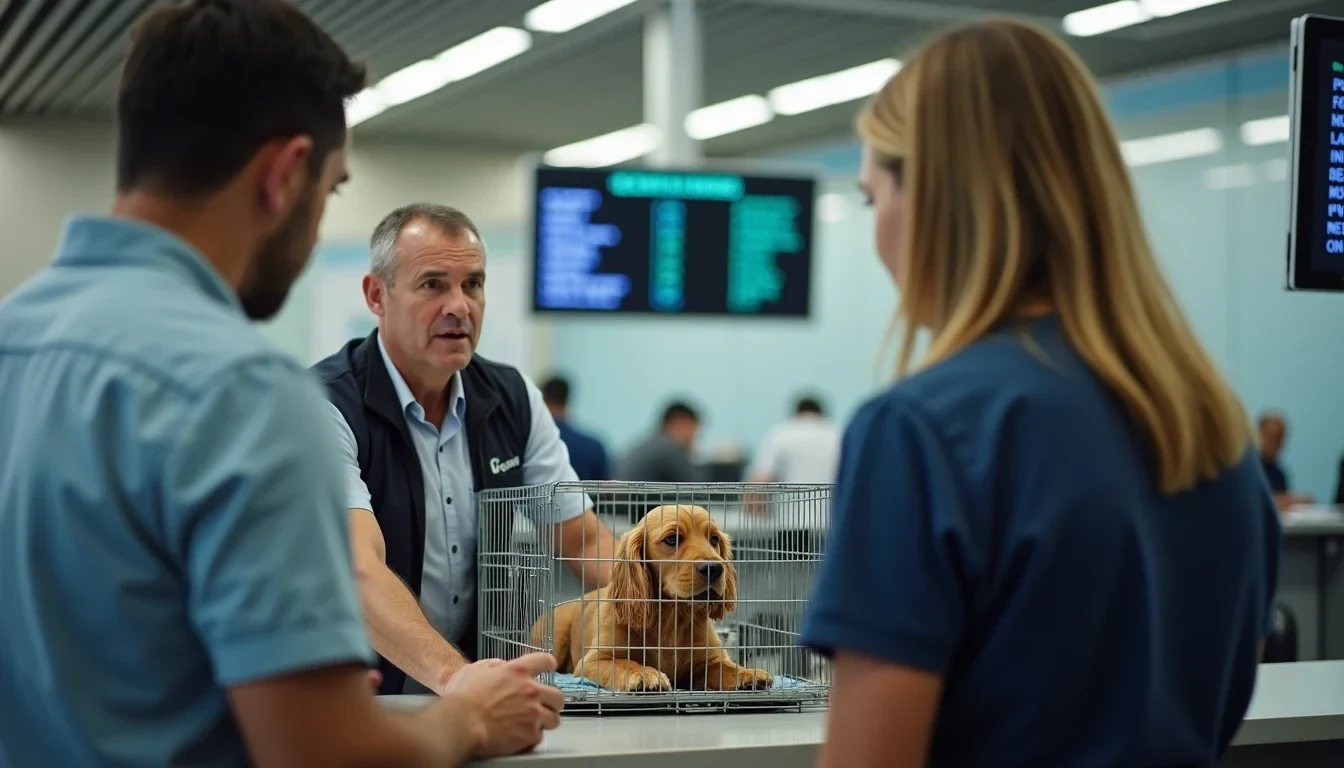
Checked baggage means booking through the passenger reservation system after securing your own seat. You present the animal at the oversized baggage counter or designated pet check-in point 90 to 120 minutes before departure, inside the passenger terminal. Collection happens at the same terminal, usually from oversized baggage claim or a specific animal handoff point shortly after landing. FlySafair and CemAir use this model for most domestic routes.
Cargo requires separate booking through the airline’s freight division or an approved agent. You receive an Air Waybill. Drop-off happens at the dedicated cargo terminal three to four hours before flight time. Collection requires the same document plus your identification. Processing delays can stretch well past the passenger baggage cycle. Airlink Cargo operates this way. The cargo terminal is rarely adjacent to where passengers check in, so confirm addresses and operating hours separately.
Brachycephalic breeds face outright bans
Short-nosed dogs and cats carry disproportionate risk in cargo holds and even checked baggage compartments. FlySafair refuses them entirely. This covers Pugs, Bulldogs of all major variants, Boston Terriers, Boxers, Shih Tzus, Pekingese, Lhasa Apsos, and several Mastiff types, plus Persian, Himalayan, Burmese, and Exotic Shorthair cats. Airlink maintains a restricted list and may accept some individuals only with a specific veterinary fitness certificate issued close to travel date, often mandating oversized crates for additional airflow. Temperature refusals hit these breeds harder and at narrower margins.
The verification habit
Policies shift between seasons, aircraft swaps, and regulatory updates. The only current source is the airline’s own cargo desk or published pet transport documentation. Cross-check whatever you read online, including this article, with a direct call before you commit money or schedule. The fifteen minutes on hold beats discovering at 5am that your Pug cannot board, or that your crate is three centimetres short of the formula, or that your destination airport’s cargo terminal closes before your delayed flight lands.