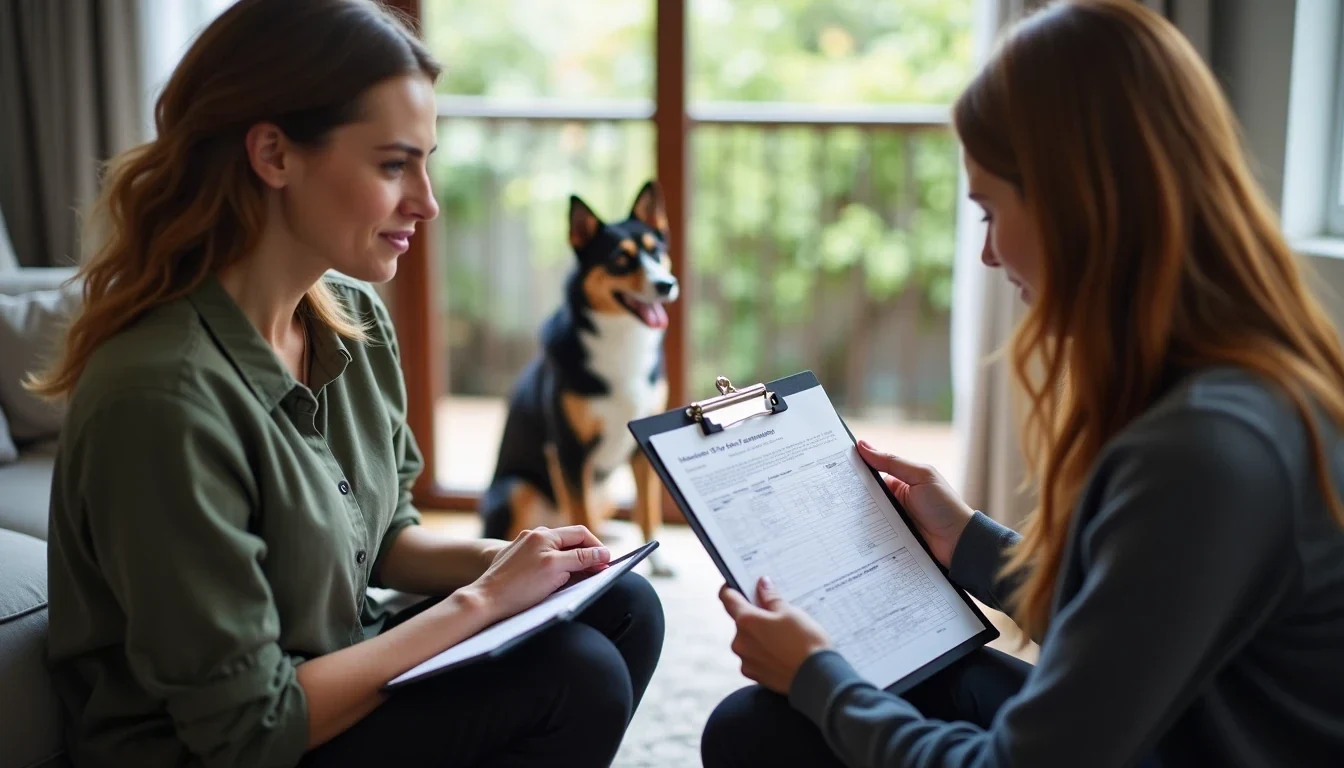
Your neighbor may love animals and still be the wrong person for the job. If your cat needs pills at 7am, your dog can slip a gate, or two pets need to be kept apart, a casual favor stops being cute very quickly.
A professional pet sitter brings structure to a messy situation. You are paying for judgment, contactability, paperwork, and a plan for the awkward bits, like a vomiting dog, a missing key, or a vet that needs authorization before treatment, not just feeding and a quick walk.
What separates a pro from a favor
A proper pet sitter runs a paid service with a defined scope, which usually means training, insurance, and a written agreement. A helpful neighbor may still be the right person for a thirsty indoor cat, but they are often not equipped for medication, panic, or a dog that has discovered the gap in the palisade.
Ask directly about:
- Pet first aid or CPR training
- Behavior training, especially if your animal is reactive, anxious, or difficult to handle
- Public liability insurance
- Care, custody, and control cover
- A written contract with fees, cancellation rules, and what happens if something goes wrong
- Whether they offer 30-minute visits, 60-minute visits, or overnight stays
If a sitter cannot explain their coverage clearly, move on. Insurance is not a decorative extra. If your dog bites someone, breaks a tooth, or damages a door while they are there, you want the business side of the arrangement to be real.
The questions worth asking first
You do not need a long interview. You need the right ones.
Ask:
- What formal pet care or first aid training have you completed?
- Do you have current public liability insurance, and can you show proof?
- Do you carry care, custody, and control cover?
- Which suburbs or towns do you actually service?
- Do you charge extra for travel outside your normal route?
- Are you available over December, January, Easter, and school holidays?
- What happens if you are sick or already booked?
- Can you give me three recent South African references?
The last question often gets vague answers. A real sitter should be able to point you to people who have used them recently and who are willing to confirm how they handled cats, dogs, medication, or house access.
For owners in Cape Town, Johannesburg, Durban, or smaller towns, service area matters more than the glossy website. A sitter based 20 km away may be fine on paper but useless in practice when traffic, fuel costs, or load shedding disrupt the schedule.
Security is part of the service
If someone is coming into your home, the pet plan and the security plan are the same plan.
Start with the keys. Ask how they handle handover, storage, and return. A decent sitter should use a coded lockbox or another secure system, not a labeled key with your address attached to it. Also ask what happens if a key goes missing and who pays for rekeying.
Then cover the house itself:
- Alarm code and how to arm or disarm it
- Gate codes
- Electric fence instructions
- Where the circuit breaker and water shut-off are
- Who to call if there is a security breach
- Whether the sitter knows your armed response company, such as Chubb or Fidelity ADT
Cameras need a conversation too. Some owners want them, some do not. Either way, the sitter should know what is being recorded and where the cameras are. A professional should not be surprised by indoor monitors or pretend they never saw them.
The handover sheet should do the heavy lifting
A one-page handover sheet beats ten rushed voice notes. Keep it clear, dated, and easy to read.
Include:
- Each pet’s name, age, breed, temperament, and usual routine
- Feeding times, exact food, quantities, treats, and forbidden foods
- Medication names, doses, timing, and how to give them
- Allergies, injuries, surgeries, or chronic conditions
- Behavior notes, such as fear of strangers, noise sensitivity, or reaction to other animals
- Favorite toys, walking routes, and any trigger points
- Vet details, including clinic name, address, phone number, and after-hours option
- Two local emergency contacts who can make decisions if you cannot be reached
- Written permission for emergency vet treatment up to a set Rand amount
- Travel dates, your contact numbers, email, and a backup contact
- Home security instructions and any practical notes like mail, plants, or water shut-off points
If your dog gets Royal Canin Mini Adult, write that down exactly. If the cat gets one tablet every morning, write that down exactly. “Feeds the pets” is not an instruction.
Proof of each visit matters
A sitter should be able to show you they actually came. The simplest version is a time-stamped photo and a short note at the start and end of each visit. Better still, some services use GPS-tracked apps such as Time To Pet or Pet Sitter Plus, which log arrival and departure, plus updates during the visit.
Do not treat this as fussiness. It protects you and keeps the sitter accountable. If a dog is left alone longer than promised, or a medication dose is missed, you want a record.
When home sitting is the wrong answer
Sometimes boarding is the better choice, and pretending otherwise creates avoidable problems.
Choose a boarding facility, or a vet-affiliated option, when:
- Your pet needs frequent medication, such as insulin injections
- Your animal needs close monitoring after surgery or illness
- Separation anxiety turns into destruction or escape attempts
- You have several pets with clashing routines or aggression between them
- You will be away for a long stretch and need continuous oversight
- Your home security setup makes overnight access awkward or risky
A good kennel, cattery, or veterinary boarding facility can provide constant supervision that a once- or twice-daily visit cannot match. For a medically fragile animal, that difference is not small.
The final filter
Book the sitter who can answer clearly, document the basics, and handle the ugly part of pet care without drama. This usually means training, insurance, strong references, a sane security process, and a handover sheet that leaves no room for guessing.
If they cannot explain what happens during an emergency, they are not a professional sitter. They are a person with keys.