
You grab the biggest bag on the shelf because the per-kilogram price looks like a win. Then you get home, check the feeding guide, and realise your retriever needs nearly half a kilo a day to stay fed. That “cheap” 25kg sack is gone in under two months. Meanwhile, your neighbour’s smaller bag of denser kibble lasts nearly as long for a dog the same size. The shelf price lied. What matters is what your pet costs to feed per day, per month, and per unit of energy they actually use.
Why kilogram price fools you
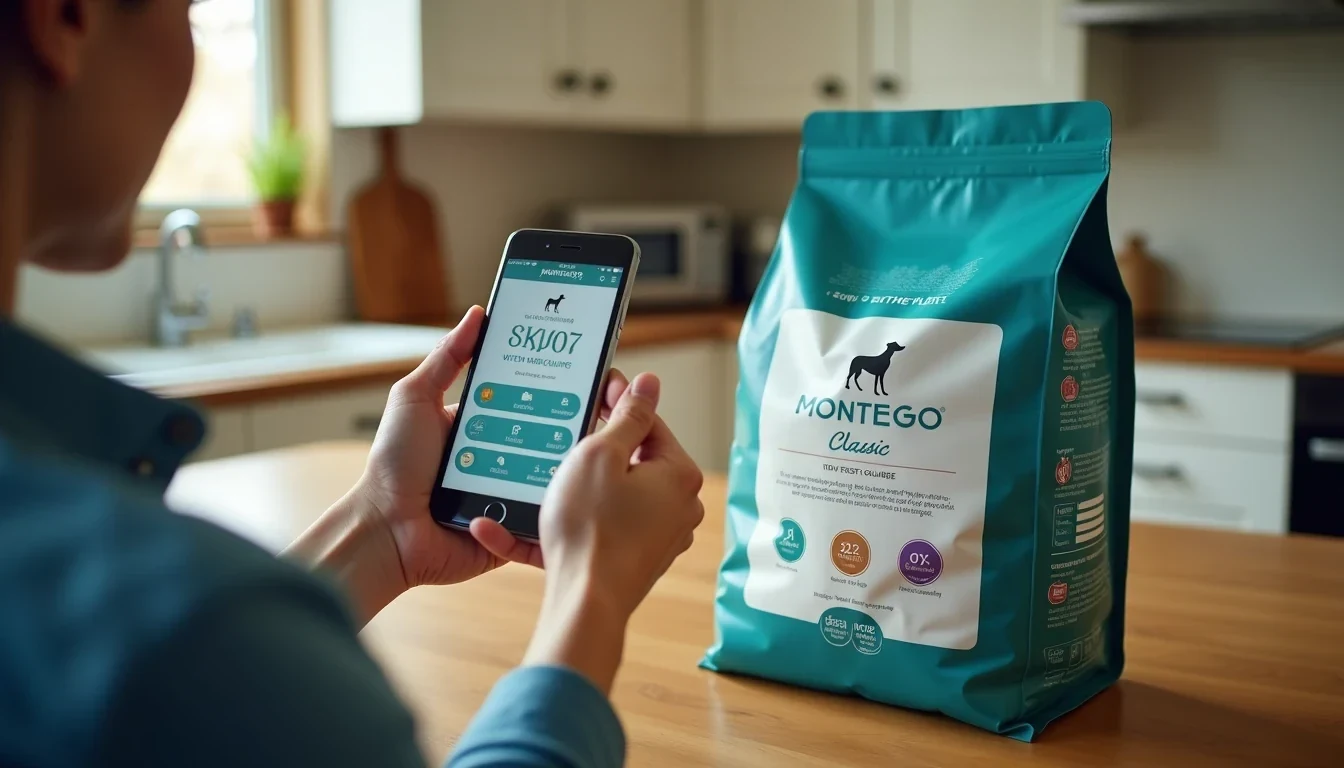
Pet food pricing at Checkers, Absolute Pets, or Pet Heaven trains your eye on the bag sticker. A 25kg bag of Montego Classic Adult Dog at roughly R900 works out to R36 per kilogram. Hill’s Science Plan Adult Medium in a 12kg bag at around R1,100 hits nearly R92 per kilogram. The first looks like the obvious budget choice.
Montego Classic delivers about 340 kilocalories per 100g. Hill’s Science Plan packs roughly 370. For a 30kg adult dog needing 1,500 kilocalories daily, that density gap changes everything. The Montego portion clocks in near 440g. The Hill’s portion drops closer to 405g. Your “cheap” bag empties faster because each meal is bigger. The real comparison is price per 100 kilocalories, the only number that accounts for how much actual energy your money buys.
The cost per 100 kilocalories formula
You need three figures: the bag price, the bag weight in grams, and the metabolizable energy in kilocalories per 100g (printed on the label or manufacturer’s site). First, find your cost per gram. Then divide by kilocalories per 100g and multiply by 100.
For that Montego Classic: R900 divided by 25,000g gives R0.036 per gram. At 340 kilocalories per 100g, each 100 kilocalories costs roughly R1.06.
For Hill’s Science Plan: R1,100 divided by 12,000g gives R0.0917 per gram. At 370 kilocalories per 100g, each 100 kilocalories runs about R2.48.
The premium food still costs more per unit of energy. But the gap narrows from 2.5x on the shelf to roughly 2.3x in real feeding terms. Sometimes, with different brand pairings or promotional pricing, the denser food actually wins on daily cost despite losing on bag price. You cannot know until you run the numbers.
What three real pets actually cost to feed
These calculations use manufacturer feeding guides for average adult animals at typical activity levels, with prices drawn from major South African retailers in mid-2024. Treats, scraps, and supplements sit outside these figures. Your individual pet will vary.
5kg adult cat
Montego Classic Adult Cat in a 5kg bag at roughly R400, fed at approximately 70g daily. Daily cost: R5.60. Monthly cost: R168.
10kg adult dog
Purina Pro Plan Adult Medium Breed in a 12kg bag at roughly R950, fed at approximately 150g daily. Daily cost: R11.88. Monthly cost: R356.40.
30kg adult dog
Hill’s Science Plan Adult Large Breed in a 12kg bag at roughly R1,150, fed at approximately 300g daily. Daily cost: R28.75. Monthly cost: R862.50.
Swap that 30kg dog to Montego Classic Adult in a 25kg bag at roughly R900, fed nearer 350g daily, and the daily cost drops to about R12.60. Monthly: R378. The nutritional profile and energy density differ, and your vet may have views on suitability for your specific dog. The raw arithmetic is stark. The same animal costs roughly double the monthly outlay for the premium line, or less than half for the budget line. Neither choice is wrong without context. Both choices are expensive if you get the portion wrong.
Where your money actually disappears
Overfilling a measuring cup by 10 to 15 percent adds 20 to 30 extra grams per meal. For a 10kg dog on 150g daily, that is a 13 percent consumption bump. Your R356 monthly becomes R402 without you noticing. Using a coffee mug, a plastic takeaway spoon, or “just a handful” makes the problem worse because the variance compounds daily.
Treats operate as a hidden subscription. A R80 bag of commercial treats, fed at five pieces daily at roughly 80 cents each, lasts about twenty days. That is R24 monthly on top of kibble, often unbudgeted. Table scraps cost nothing at the kitchen counter but can trigger nutritional imbalances, obesity, and vet consultations that dwarf any food savings. The R240 you “saved” on a cheaper bag evaporates in a single consultation for pancreatitis or joint stress from weight gain.
When to stop calculating and call your vet
Feeding guides on bags are starting points, not contracts. A nursing mother, a high-drive working dog, a senior cat with renal markers, or a pet recovering from surgery all break the standard model. Metabolic rate varies by breed, season, stress level, and medication. The 5kg cat needing 70g on the chart might need 55g or 90g in reality. The 30kg dog might maintain weight on 280g or blow past 380g before feeling full.
Your vet adjusts for body condition score, muscle mass, and health history. They can also identify when a higher cost per 100 kilocalories pays for itself in digestibility, stool volume, coat condition, or long-term disease risk. The calculation gives you a shopping tool. The professional gives you a feeding plan. Use both.