Your dog hops into the back seat for the school run or a quick vet visit without fuss, so you assume the December holiday drive to the KZN South Coast will be fine. That assumption has ruined many a family trip. A ten-minute suburban loop gives no indication of how your dog will handle four hours on the N3, unfamiliar accommodation smells, busy petrol station forecourts, and the heat radiating off tar that has been baking since sunrise. Dogs that cope with short trips do not necessarily cope with holiday travel. The difference is preparation, and most owners only discover the gap when they are already two hours from home with a vomiting, anxious animal.
Build the restraint setup before you pack a single bag
South African law does not explicitly require pet restraints, but the National Road Traffic Act demands that drivers maintain complete control of their vehicles. An unrestrained dog fails that test the moment it climbs onto your lap or blocks your rear-view mirror. A 20kg dog becomes a projectile with lethal force in a collision at highway speed.
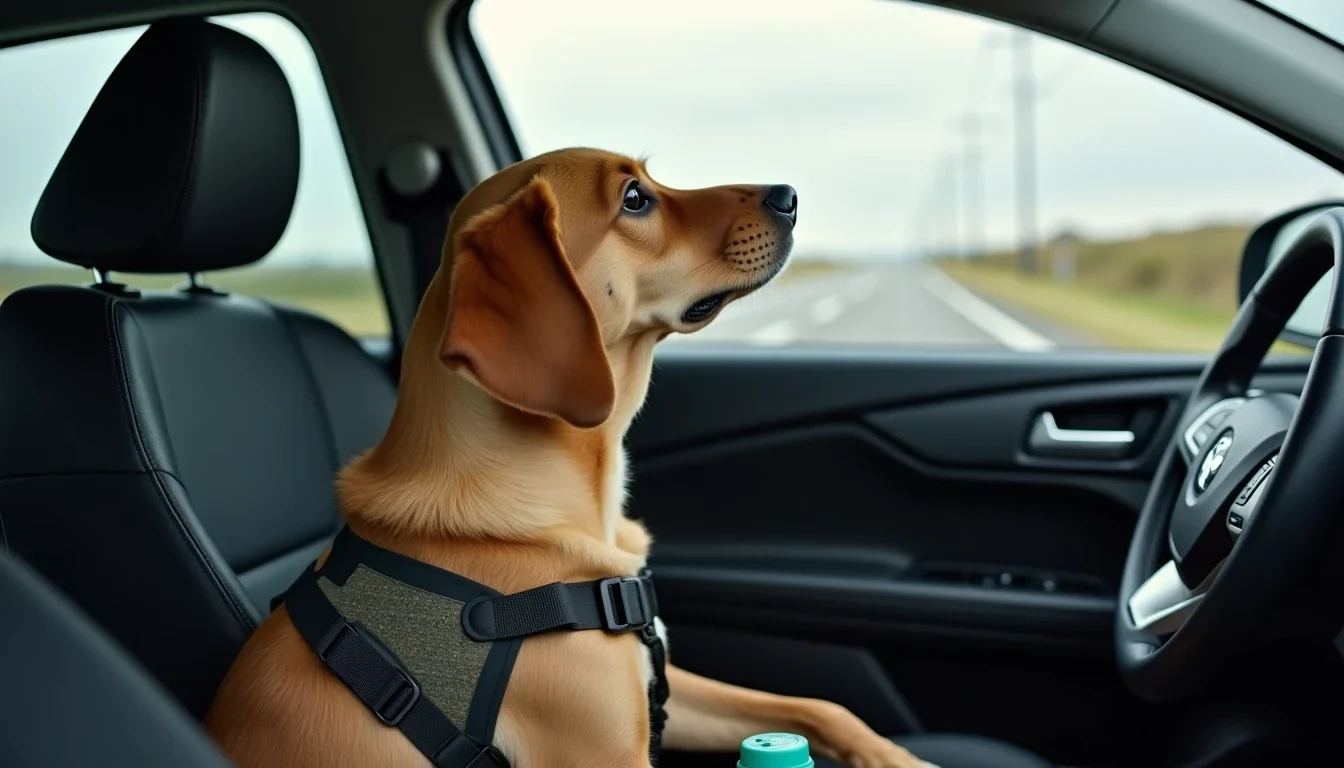
Crash-tested harnesses certified by independent bodies like the Center for Pet Safety distribute impact across the chest rather than the neck. Brands such as Kurgo and Sleepypod carry this certification and are stocked by South African retailers including Absolute Pets. For smaller dogs, a secured car seat with proper harness attachment serves the same purpose. Larger dogs often travel more safely in a hard-sided crate anchored in the boot, ideally with a cargo barrier in SUVs or station wagons. Avoid the cheap seatbelt-clip attachments sold at generic outlets; they prevent little and can injure badly.
Water, food, and the rhythm of the road
Dehydration arrives faster than most owners recognise, particularly on the Highveld or through the Karoo where humidity drops and air conditioning dries the cabin. Carry more fresh water than you think necessary and a collapsible bowl that you can offer every two to three hours. Do not wait for your dog to appear thirsty.
Feeding is where good intentions backfire. A full stomach before a winding mountain pass or stop-start traffic through Harrismith is a reliable recipe for motion sickness. Offer a light meal four hours before departure, or feed the main meal once you have arrived. Plan stops every two to four hours for at least fifteen minutes of leashed walking, away from fuel pumps and hot asphalt. Carry waste bags and use them. The rest areas along South Africa’s major routes are not maintained for your convenience, and leaving faeces behind risks access for every pet owner who follows.
Never leave your dog in a parked car, even with windows cracked. Interior temperatures climb 20°C within ten minutes in direct sun. This can lead to organ failure.
The paperwork that saves holidays
Internal travel within South Africa requires no border documentation for dogs, but absence of legal requirement is not the same as absence of need. Your dog must be microchipped with current registration through Identipet or Virbac, and the collar tag should carry your cell number and a secondary contact. Vaccination records, particularly proof of rabies vaccination, are frequently demanded by pet-friendly accommodation and will be essential if your dog needs veterinary attention in an unfamiliar town. Photograph the vaccination booklet and store the images on your phone. Add your regular vet’s number and the details of a 24-hour clinic near your destination. If your dog is insured, keep the policy number accessible.
Choosing accommodation that actually wants your dog
“Pet-friendly” is a filter, not a promise. Confirm directly with the property before booking. Ask about breed and size restrictions, designated pet rooms, and whether dogs are permitted in common areas. Most establishments require leashes in all shared spaces. Many prohibit leaving dogs unattended in rooms, particularly if barking or destructive behaviour is likely. Some charge nightly pet fees or refundable deposits. Clarify furniture rules before you arrive, and bring your own bedding if your dog is accustomed to sleeping on something familiar. Noise complaints can get you evicted with no refund, and no amount of arguing changes that outcome.
When to call the vet into the conversation
Motion sickness is not a character flaw your dog will grow out of on the N1. Excessive drooling, lip-licking, yawning, restlessness, or vomiting during car rides are specific symptoms that warrant professional consultation. Do not administer human anti-nausea medication or sedatives without veterinary guidance. Your vet can prescribe maropitant citrate (Cerenia) formulated specifically for dogs, or recommend appropriate calming protocols. For older dogs, puppies, or animals with chronic conditions, a pre-travel health check identifies problems before they emerge far from home. If your dog develops severe lethargy, persistent diarrhoea, or heatstroke signs such as excessive panting and disorientation during the trip, seek emergency veterinary care immediately.
The practice trip that reveals everything
If you have never travelled beyond the suburbs with your dog, schedule a rehearsal. A ninety-minute drive to a nearby town, with a stop at a busy petrol station and a walk in unfamiliar surroundings, tests more than the car ride itself. Watch how your dog responds to highway noise, to the confinement of a crate or harness, to the temperature change when you open doors at midday. Return home, observe recovery behaviour, and adjust your setup accordingly. Repeat with a longer loop if the first outing exposes problems.
The dogs that pass this test are not the calmest or the most obedient. They are the ones whose owners identified the gaps early and closed them. Holiday travel is demanding enough without discovering, somewhere past Van Reenen’s Pass, that your dog was never ready for the distance.